


Last week, I tried to book a flight and felt like I was playing a high-stakes game of Whac-A-Mole. Every time I clicked “continue,” a new charge popped up for things that used to be free. It is like the industry decided my vacation budget was their personal piggy bank.
If you feel like you are being squeezed by hidden costs, you are not alone. This 2026 travel survival guide is your secret weapon to stop the madness. We are going to navigate this minefield together so you can keep your sanity and your cash.
It is time to stop being a victim of the system. Let’s start planning your next trip like you actually know what is going on behind the curtain.
Key Takeaways
- Understand the shift toward hidden costs in the current landscape.
- Learn how to spot “junk” charges before you hit the checkout button.
- Master strategies to protect your vacation budget from rising taxes.
- Discover how to navigate restrictive policies without losing your cool.
- Gain the confidence to book trips like a seasoned industry pro.
The Shift in Airline Economics: Why Travel Costs Are Skyrocketing
Booking a flight in 2026 feels like a high-stakes game of financial Jenga. It’s not just about the cost; it’s about the complexity. The travel expenses today are a complex beast that would make a tax accountant blush.
Once, a ticket price covered the cost of travel, including a bag and pretzels. Now, airlines charge extra for everything. It is a frustrating reality, but knowing the math is your only defense.
Airlines now make more money from extra fees than from selling seats. They charge for better seats and even for extra clothes. Your travel expenses include many small fees that didn’t exist before.
To see how your wallet is being drained, consider the cost shift for the average traveler:
| Cost Category | Historical Norm | 2026 Reality |
|---|---|---|
| Base Fare | All-inclusive | Bare-bones |
| Checked Bags | Included | $50 – $75 per bag |
| Seat Selection | Free | $20 – $100+ |
| Total Travel Expenses | Predictable | Highly Variable |
This shift isn’t just about inflation; it’s a strategy to keep base fares low. By the time you add taxes, food, and extra charges, you often pay double. It’s a wild ride, but knowing the game is the first step to winning it.
Navigating Travel fees Baggage fees Airline lounges Credit card rewards Basic Economy
Air travel has turned into a game of financial survival. You might have thought you were getting a good deal, but the fine print reveals otherwise. It is almost impressive how airlines have made every basic need a premium service.
The Anatomy of Junk Fees in 2026
The modern travel scene is full of hidden costs. Every “convenience” comes with a price that makes you want to scream. These travel fees are designed to surprise you when you book.
You know the usual fees, but there are more. Here’s what you face:
- Baggage fees that keep going up.
- Charges for airline lounges that used to be free.
- Devalued credit card rewards that are hard to use.
- Seat selection fees that make sitting with your family expensive.
Why Basic Economy Has Become a Punitive Tier
Once, Basic Economy was a cheap option for a middle seat. Now, it’s a truly punitive tier that makes travel hard unless you upgrade.
Airlines have taken away the basics to make “budget” travel feel like a punishment. You board last, can’t pick your seat, and can’t change your flight. It’s a game to make you spend more to avoid Basic Economy trouble.
Trying to save money means more stress and lost time. It’s a trap that makes you feel like a second-class citizen in the sky. Honestly, is the savings even worth the headache?
The End of an Era: Southwest Airlines and the Death of Free Bags
If you thought “Bags Fly Free” was forever, I have bad news for your wallet. For years, Southwest was the last place where you didn’t get charged for bags. Now, it’s ended its famous policy, changing the airline fees game.
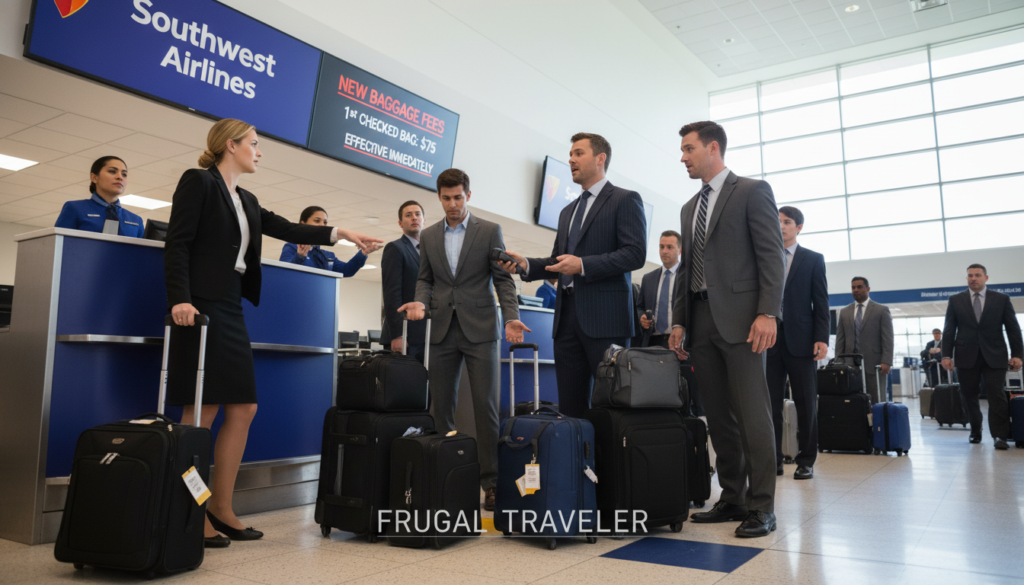
This feels like losing a close friend. We knew this day was coming, but it still hurts our wallets. The Southwest airlines baggage fee change shows that packing without worry is over.
The Financial Impact of $55 Baggage Fees
Let’s look at the numbers, even if they’re hard to swallow. With fees at $55 per bag, checking your luggage now costs a lot. This change affects how we plan our travel budgets.
Here are the effects of these new airline fees:
- Immediate Budget Bloat: Every checked bag now costs money.
- Behavioral Shifts: People pack more in carry-ons to avoid the fee.
- Competitive Parity: Southwest now charges like other airlines, losing its edge.
Calculating the $400 Family Trip Surcharge
A $55 fee is bad for solo travelers. But for families, it’s really tough. A family of four checking bags can add $400 to your trip cost.
That $400 could have been for a hotel upgrade, dinners, or car rental. The Southwest airlines baggage fee change makes families rethink how they pack. You might play Tetris with your bags to save money.
The Hidden Math of Basic Economy: Is the Savings Worth the Punishment?
Welcome to Basic Economy, where savings are often just an illusion. Airlines use this fare class to make you feel like a second-class citizen. They do this by offering budget-friendly tickets.
It’s like they’re saying, “We’ll take your money, but you’ll sit in the middle seat in the back.” You might think you’re saving money, but you’re actually falling into a trap.
Restrictions on Seat Selection and Boarding
The rules on seat selection and boarding are very annoying. Airlines take away your choice of seat. This means you’ll end up in the worst spot on the plane.
You’ll also be the last to board. This means your carry-on bag will likely be checked at the gate. It’s not just a small problem; it’s a way to make you regret saving money.
The Cost of Upgrading Mid-Trip
Once you’re stuck in that middle seat, things get worse. You might want to upgrade to get a better seat.
But upgrading from Basic Economy is rarely cheap. By the time you pay to upgrade, you’ve likely spent more than if you’d booked a standard fare.
In the end, the math doesn’t add up in your favor. You’re paying to be uncomfortable. That’s a bad deal by any measure.
Luxury Travel Under Siege: The New Reality of Premium Credit Cards
That heavy metal card in your wallet is now more like a paperweight. If you thought it was a ticket to luxury, think again. The reality of credit card rewards in 2026 is harsh, with fewer perks and higher costs.
The Inflation of Annual Fees
Every time you turn around, your travel card’s annual fee goes up. It’s not just for convenience anymore. It’s for being part of an exclusive club that’s losing its appeal. The benefits are getting slimmer than a budget airline sandwich.
Is it worth the high fees? Or are you just chasing status? When fees hit $800 or $900, it’s hard to see the value. Most of us are paying for perks that only a few enjoy, while we fight for a decent seat in the lounge.
Diminishing Returns on Lifestyle Credits
Lifestyle credits were meant to make high fees worthwhile. But they often feel like a scavenger hunt for coupons to stores you never visit. It’s a case of credit card rewards looking good on paper but hard to use in real life.
These credits are getting more restrictive or tied to unwanted services. If you’re jumping through hoops to save twenty dollars, you’re not winning. You’re playing a complex game designed to keep you spending. It’s time to question if these cards are worth the cost or just a status symbol.
Amex Platinum in 2026: Analyzing the $895 Annual Fee and Lost Credits
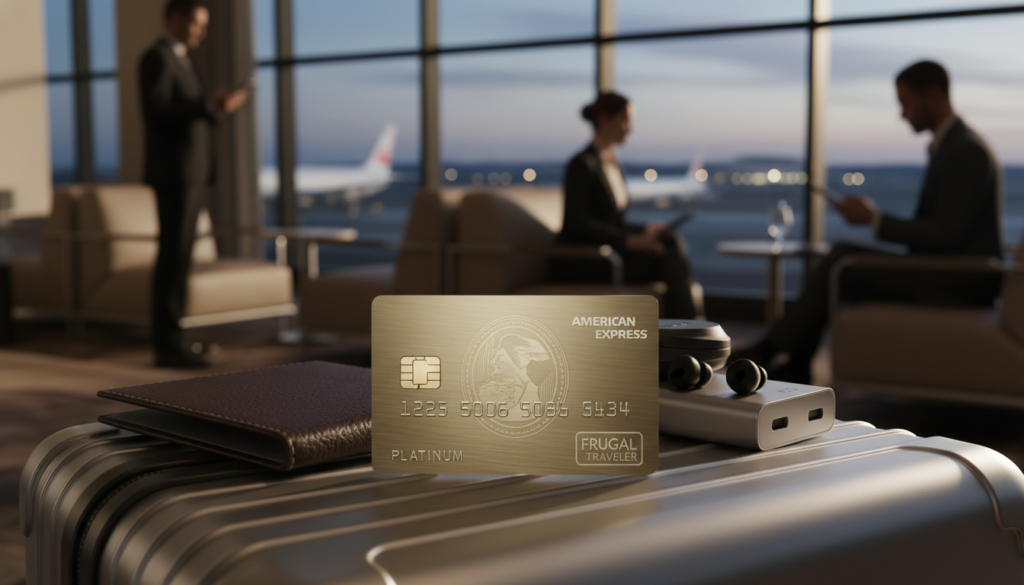
Have you looked at your credit card statement lately? The Amex platinum annual fee 2026 is now $895. It’s a big hit to your wallet. Honestly, it feels like the card has gone too far.
Is this card still worth it, or is it just expensive? With costs this high, you must ask if it’s worth the money. It’s time to do the math before you decide to keep it.
Evaluating the Removal of Saks Fifth Avenue Credits
The Saks Fifth Avenue credits are gone this year. For many, this was the only good thing about the high cost. Losing it feels like a big scam.
It’s tough to feel good when a benefit you counted on is gone. You’re left with a bigger bill and fewer ways to save. It makes you wonder if other perks will go too.
Is the Value Proposition Still Intact?
To see if the Amex platinum annual fee 2026 is still worth it, track your use of the remaining credits. If you’re not using the lounge access, hotel status, and travel incidentals, it’s not worth it. Spoiler alert: for many, the value is very low.
Take out a spreadsheet and compare your spending to the rewards you get. If you’re struggling to break even, it might be time to say goodbye. Loyalty should be a two-way street, and right now, it’s not.
The New Rules of Airport Lounges: Time Limits and Entry Restrictions
The days of lounging in airline lounges with endless snacks are over. Remember when you could arrive five hours before your flight and relax? Now, these places feel more like a strict school than a luxury spot.
Today, time is of the essence as soon as you show your boarding pass. This is far from the relax and recharge experience we were sold. It adds more stress to your travel day.
The 90-Minute Limit Policy
Planning a long layover? Think again. Many airline lounges now have a strict 90-minute limit, especially during busy times. Once your time is up, you’ll be asked to leave to make room for others.
Being kicked out just as you’re getting comfortable is frustrating. This policy aims to prevent overcrowding but turns lounges into a timed sprint. You’re treated like a temporary asset, not a valued guest.
Strict 3-Hour Entry Windows Explained
Rules aren’t just for leaving; they’re for entering too. Most major airports now have a 3-hour entry window. You can’t get in until three hours before your flight. Arriving early to avoid terminal chaos won’t help.
This rule is to stop lounges from being used like a hotel lobby. But for frequent flyers, it’s a big loss. The table below shows how these new rules compare to the old ways.
| Feature | Old Lounge Rules | New 2026 Reality |
|---|---|---|
| Entry Time | Anytime before flight | Max 3 hours prior |
| Stay Duration | Unlimited | 90-minute cap |
| Atmosphere | Peaceful sanctuary | High-stress turnover |
| Value | High | Diminishing |
Strategic Alternatives: Why Travelers Are Switching to Chase Sapphire Reserve
Paying a huge annual fee for little return is not fun. It’s like sitting in a middle seat in the back row. If your premium card feels like a money-hungry ex, it’s time to explore other options. Many travelers are switching to the Chase Sapphire Reserve, known as one of the best travel credit cards for families 2026.
Comparing Premium Card Benefits
High-end cards often feel like coupon books that are hard to use. You spend a lot of time trying to remember if you used your monthly dining credit. The Chase Sapphire Reserve makes things refreshingly simple by focusing on broad travel categories.
This card gives you real, usable points for travel costs. It’s a big difference between getting a discount on a fancy candle and a free flight for your kid. When you look at the value, the Chase Sapphire Reserve often comes out on top.
Flexibility in the Current Economic Climate
In today’s economic chaos, flexibility is key. You need a card that works as hard as you do, not just takes your money. The Chase Sapphire Reserve offers a transferable points system for various airline and hotel partners.
This flexibility is why it’s a top choice for families in 2026. Whether it’s a last-minute trip to grandma’s or a summer vacation, moving points to where they’re most valuable is a game-changer. Stop paying for prestige and start paying for actual travel freedom.
Loyalty Program Evolution: Is Alaska Airlines Atmos Rewards the New Gold Standard?
Alaska Airlines Atmos Rewards is a program that treats you like a person, not just a wallet. In a world where airlines charge for air, finding a program with real elite status perks is a rare find. It’s like discovering an oasis in a desert of fees.
This program values your loyalty over your wallet. Finally, someone is rewarding the people who keep planes flying.
Earning Potential in a Fee-Heavy Environment
Most programs today make earning points a challenge. Atmos Rewards, however, is straightforward, even with extra fees.
You can earn points on base fares without needing a math degree. By traveling regularly, you get elite status perks like priority boarding and waived fees. This saves your sanity.
Redemption Value for Frequent Flyers
The true test of a loyalty program is whether your points can buy a flight. Many programs have devalued their points so much, they’re almost worthless.
Alaska Airlines Atmos Rewards keeps its points valuable. This means your miles can actually get you somewhere, unlike other programs.
| Feature | Standard Program | Atmos Rewards |
|---|---|---|
| Earning Rate | Low/Variable | High/Consistent |
| Elite status perks | Limited | Comprehensive |
| Redemption Value | Declining | Stable |
| Fee Waivers | Rare | Frequent |
If you’re fed up with being charged for everything, check out this program. It might be the gold standard we’ve all been waiting for.
Mastering Minimalist Packing to Bypass Baggage Fees
Standing at a baggage carousel is like watching paint dry, but more expensive. Every checked bag is like burning money. It’s time to stop letting baggage fees control your travel budget and take back your freedom.
The secret to a stress-free trip is simple: carry what you can. By mastering the one-bag lifestyle, you skip lines, avoid lost luggage, and keep more money in your wallet.
Essential Gear for One-Bag Travel
You don’t need a lot of gadgets to travel light. The key is a high-quality, carry-on compliant backpack that uses every inch of space. Look for bags with laptop sleeves and compression straps.
Packing cubes are your new best friends. They keep your clothes organized and compressed. Versatile, quick-dry clothing also makes a big difference, letting you wash and wear items without a huge wardrobe.
Techniques for Maximizing Carry-On Space
Learning how to avoid airline baggage fees starts with packing smart. Rolling your clothes saves space and prevents wrinkles. It turns shirts and pants into tight cylinders that fit well in your bag.
Remember the “wear your heaviest items” rule. Wear bulky boots and jackets on the plane if it’s cold. It saves space in your bag and keeps you warm.
Use the “dead space” inside your shoes. Stuff socks, chargers, or small toiletries in your footwear. With these tips, you’ll never worry about baggage fees again.
Leveraging Co-Branded Credit Cards for Fee Waivers
Paying extra for a suitcase is a big insult. You’ve already paid for your ticket. Why should you pay more just to carry your clothes? It’s time to join a travel rewards program that really helps you.
How to Offset Baggage Costs Through Airline Partnerships
If you always fly with one airline, use that to your advantage. Co-branded credit cards can help you avoid baggage fees through airline partnerships. Just having the right card can save you money.
“The best way to predict your future travel costs is to create them yourself by choosing the right financial tools.”
Major airlines offer cards with free checked bags as a perk. This is not just a bonus; it’s a must in today’s world of extra fees. When you book with your card, the airline knows you’re a valued customer and waives the fee.
Selecting the Right Card for Your Travel Frequency
Not every card is right for every traveler. Choosing the wrong one is a common mistake. You need to think about how often you travel before getting a card with an annual fee.
Before picking your next travel rewards program card, consider these:
- Flight Volume: Do you fly enough to make the annual fee worth it just for the baggage savings?
- Loyalty: Are you really loyal to one airline, or do you just go for the cheapest option?
- Ancillary Perks: Does the card offer perks like priority boarding or lounge access that add value?
If you fly a lot, a card that offers free bags for you and others is a smart choice. It’s a simple way to save money. Don’t let your travel rewards program cost you money. Make it work for your next trip.
Aggressive Research: How to Spot Upselling Traps Before Booking
The travel industry has turned buying a ticket into a game of “spot the hidden charge.” If you don’t do your homework, you’ll fall for every upselling trap. In 2026, the industry is all about upselling, and not being prepared can cost you a lot.
Knowing the facts is your best defense against unexpected bills. Approach every booking with skepticism. Also, pack lightly to avoid extra baggage fees.
Tools for Price Comparison and Fee Tracking
Don’t rely on just one website for prices. Use tools like Google Flights or the ITA Matrix to see the real cost. These tools help track travel fees in real-time, so you won’t be surprised by price hikes.
“The most expensive ticket is the one you buy without knowing exactly what you are paying for.”
Set up price alerts early and watch the numbers. If prices jump suddenly, it might mean new fees. Stay alert and keep your browser clean to avoid price traps.
Reading the Fine Print on Ancillary Charges
Airlines often hide travel fees until the end. You might think you’ve got a good deal, but then see extra fees. Always check the final payment screen before you book.
Watch out for these red flags:
- Basic Economy restrictions: Make sure you can bring a carry-on before booking.
- Seat assignment costs: Check if the “free” seat is really a middle seat in the back.
- Change and cancellation policies: Make sure you’re not buying a ticket that’s hard to change.
By doing thorough research, you can outsmart the airlines. Don’t let them take your money. Stay informed and protect your travel budget.
Conclusion
Surviving the 2026 travel scene is like playing a tough game of whack-a-mole. The mallet costs extra, and your wallet is always under attack. It feels like every airline and credit card company is trying to take your money.
Don’t let these tricks stress you out. You can keep your money safe by being smart and not playing their game. It’s your money, and you should control how it’s spent.
Learning to pack light can save you from those high baggage fees. Choosing the right credit card, like a Chase Sapphire Reserve, makes your benefits worth it. It’s not just about the cost of the card.
Research is your strongest tool against hidden fees. Always read the fine print before booking. Your vacation should be about making memories, not fighting over extra fees.
Pack light, stay smart, and focus on your goals. May your travels be free of unnecessary stress and surprise costs. Travel on your own terms and enjoy your journey.


