

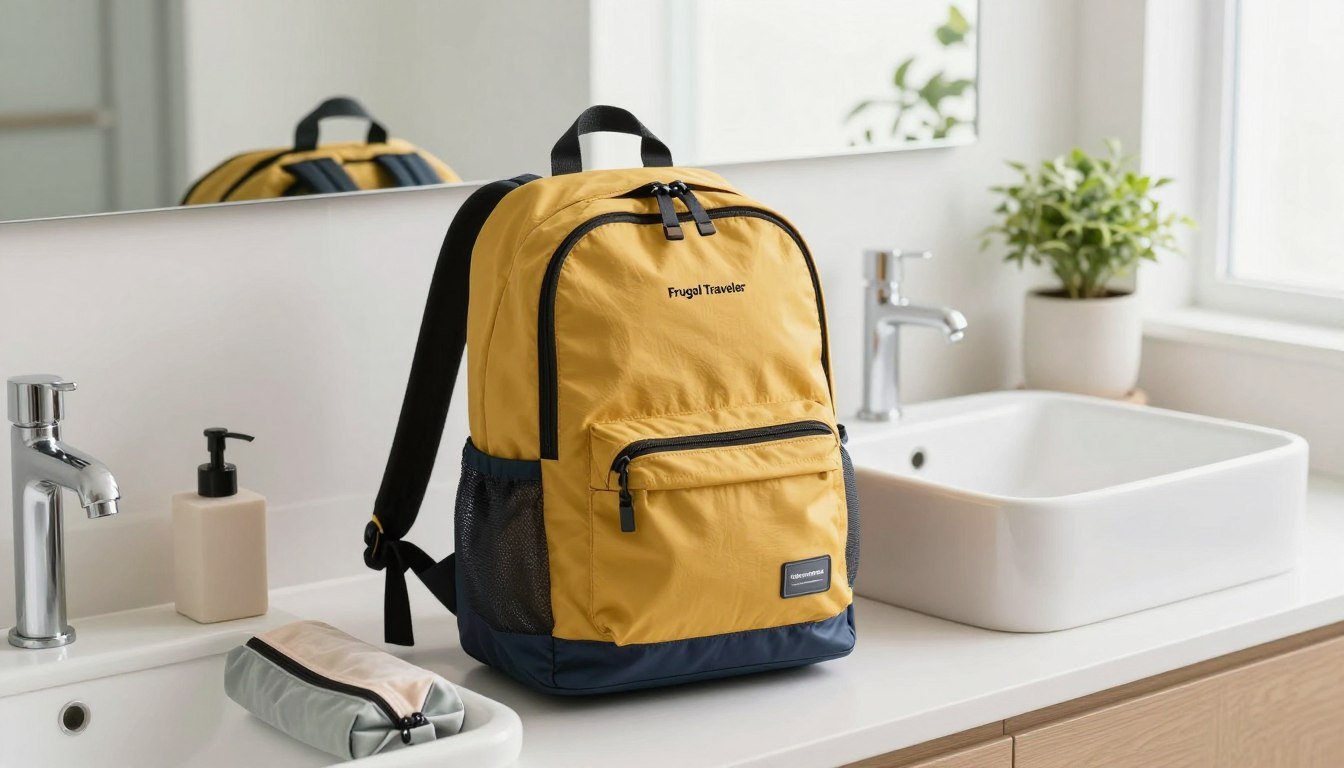
I once packed for a weekend as if I might need three versions of my personality and a backup personality. The bag barely closed, and I still forgot the socks. Then I learned a small bag can work when you rotate clothes and wash them on the road.
A 20-24L personal item can cover a longer trip if you pack with care. The metal sizer is a fixed frame at the gate used to check whether a packed bag fits the airline’s size limit. It measures what you brought, not what the product page promised.
This approach puts the rules before clever tricks. I’ll show you how to save space, wash a four-day wardrobe in a sink, and avoid fees you could have avoided. A low headline fare can still turn into an expensive trip, so let’s start there.
Key Takeaways
- Ryanair’s free personal item must fit under the seat in front.
- Measure the packed bag, including pockets, straps, handles, and wheels.
- A flexible 20-24L pack can work, but volume alone proves nothing.
- Rotate a small selection of clothing and wash items during longer trips.
- Choose a paid bag option when your real needs call for more space.
How Do Travel, Budget Airlines, Baggage Fees, One-Bag Travel, and Ryanair Sizer Fit Together?
A low flight fare can look less charming after you add a cabin bag, checked luggage, and a few other fees. The base fare may cover only the seat and one small personal item.
Budget airlines often sell unbundled fares, meaning the ticket and optional services are priced separately. Adding baggage online usually costs less than adding it at the airport. Fees below are in pounds or euros, as listed in September 2026, and vary by route and date.
Know the baggage allowance before you reach the airport. Online baggage fees are lower than airport fees.
Why the advertised fare can be only the starting point
Here is the basic comparison. The free option has strict size rules, while paid options give you room for an overhead cabin bag or a checked bag.
| Option | Online price | Airport price | Key condition |
|---|---|---|---|
| Free small bag | £/€0 | £/€0 | One item under the seat |
| Priority & 2 Cabin Bags | £/€12.49-36 | £/€19.99-45.50 | Includes overhead cabin bag |
| 10 kg check-in bag | £/€10.49-44.99 | £/€24-75 | Bag goes in the hold |
| 20 kg check-in bag | £/€21.49-59.99 | £/€39.99-75 | Bag goes in the hold |
The fare you first see may not match the trip you plan to take. Add the bag you need before comparing tickets, rather than treating every extra as a surprise plot twist.
What can an airport baggage mistake cost?
A non-priority 10 kg bag placed in the hold at the gate costs £/€46-75. An oversized cabin bag costs £/€70-75 at the gate. The exact fee depends on the route and date.
Those listed amounts do not support a single US-dollar estimate for every traveler. Currency, route, and travel date affect the price, so a blanket dollar amount can be misleading. The Ryanair sizer is not a place to negotiate a new allowance.
Knowing your allowance in advance is cheaper than paying a gate fee. The next step is learning exactly what Ryanair includes for free.
What Can You Bring for Free on Ryanair?
The basic fare includes one small bag that must fit under the seat in front, not a standard American overhead carry-on. That free personal item can be a backpack, provided it fits within the allowance.
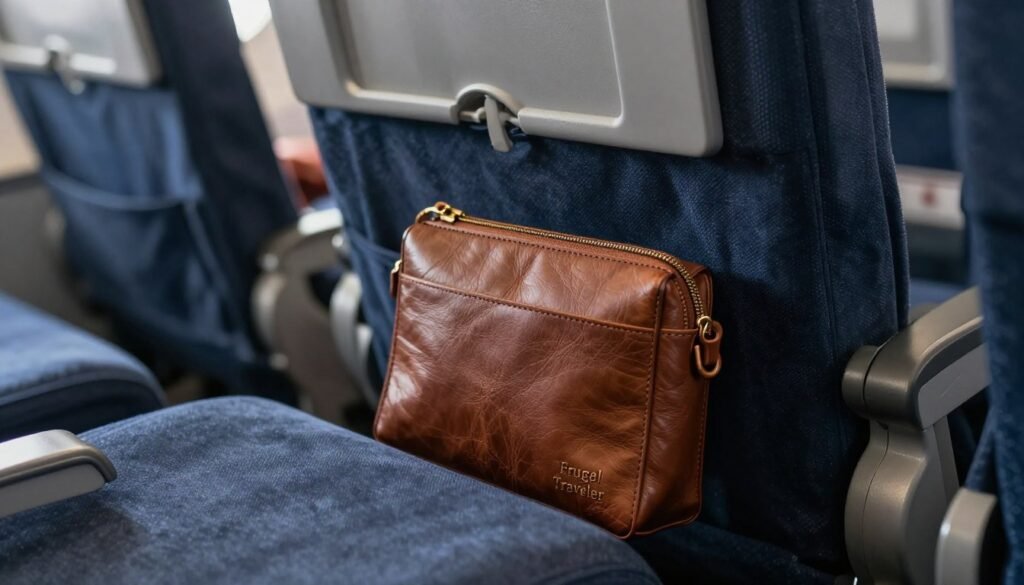
The free limit is 40 x 30 x 20 cm (15.7 x 11.8 x 7.9 in). Handles, wheels, pockets, and other parts count toward luggage size. Ryanair does not officially set a weight limit for this free item.
| Option | Maximum size | Weight | Where it goes |
|---|---|---|---|
| Free personal item | 40 x 30 x 20 cm | No official limit | Under seat in front |
| Priority overhead cabin bag | 55 x 40 x 20 cm | 10 kg | Overhead cabin |
| 10 kg checked bag | 55 x 40 x 20 cm | 10 kg | Aircraft hold |
| 20 kg checked bag | 80 x 120 x 120 cm | 20 kg | Aircraft hold |
Priority & 2 Cabin Bags: add an overhead cabin bag; it does not replace the free item. Ryanair increased the free size in 2025, changing it from 40 x 25 x 20 cm to 40 x 30 x 20 cm.
Common US carry-ons around 22 x 14 x 9 inches exceed at least one free-bag dimension. They are not a safe bet under Ryanair’s cabin rules, even if they fit in other airlines’ overhead bins.
Measure your packed bag against the current allowance, then choose a shape that can fit without forcing it.
Which Bag Is Most Likely to Fit the Ryanair Sizer?
A backpack that looks tiny online can turn into a stuffed pillow once you fill every pocket. Soft fabric gives you more room to work with, but it does not change the limit.
A 20-24L pack is a practical target, not a promise that every bag will fit. Shape, pockets, straps, and how tightly you pack all affect bag fit.
Why a frameless backpack can beat a roller
A frameless backpack often uses soft nylon that conforms to available space. A rigid roller bag keeps its shape, and its wheels and handles take up room before you pack a single sock.
That flexibility can help a backpack fit more easily into the metal sizer. It is not permission to push, bend, or squash a bag past its limit.
Ryanair’s physical metal sizer matches the maximum bag dimensions. The bag must drop in freely, without force, compression, or help from staff. The frame is a fit test, not an invitation to wrestle luggage in public.
Measure the packed bag, not the product tag
Load the bag as you plan to travel, then measure it at its widest points. Count external pockets, loose straps, handles, and any other protrusions within the bag’s dimensions.
An empty backpack can fit the listed size and still bulge past it when packed. A water bottle in a side pocket or a stuffed front pouch can change the result.
Check the length, width, and depth with the load settled inside. If the bag only fits when you press it hard, choose less gear or a different bag.
Once the bag shape passes a real measurement, you can decide which clothes deserve its limited space.
What Should Go in a Four-Day Travel Wardrobe?
For four days, I’d pack a small rotation instead of four complete outfits. Choose pieces that mix, so a clean top can work with either pair of bottoms.
These quantities are a practical example, not a rule for every trip. Merino wool can resist odor, while quick-drying synthetics can make washing easier.
| Clothing category | Suggested quantity | Packing reason |
|---|---|---|
| Versatile tops | 3 | Mix with either bottom |
| Bottoms | 2 | Rewear between washes |
| Underwear | 4 pairs | One pair per day |
| Socks | 4 pairs | One pair per day |
Choose merino or synthetics instead of cotton if you like their feel and care needs. Cotton can feel great, but it often takes longer to dry after a wash in the sink.
A spare layer should suit the destination, not appear by default. Cold evenings may call for one; a warm beach trip may not.
This plan works because you reuse pieces and wash them, rather than packing four untouched outfits. That makes sink laundry part of the routine.
How Can You Wash Clothes in a Sink and Dry Them Overnight?
When I reach my last clean shirt before a trip ends, the hotel sink starts looking like a tiny laundromat. A small hand wash can refresh a few items without special equipment.
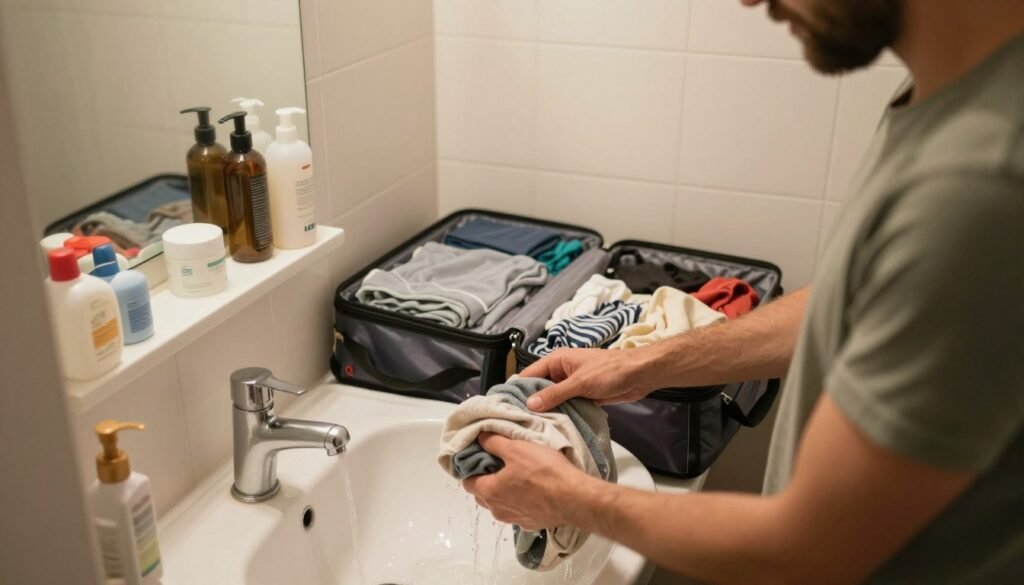
Wash a small load, remove as much water as you can, then hang it where air moves. Drying overnight is possible, but not guaranteed.
Wash a small load with detergent sheets
- Check that the sink is clean and drains well.
- Dissolve a detergent sheet in water, following its package directions.
- Wash a small load by hand, gently rubbing the fabric.
- Rinse each item thoroughly until soap no longer remains.
- Press out water without twisting delicate fabric.
- Roll each item in a clean towel, then hang it where air can circulate.
A few items are easier to wash and dry than a full week’s laundry. I learned that by attempting a sink load large enough to have its own travel plans.
Use the towel burrito to remove water
Lay the clean item flat on a dry towel. Roll the towel and clothing together, then press along the roll to move water into the towel.
Do not twist delicate fabric to speed things up. Follow each care label, and keep items that need special treatment out of the sink.
Drying time depends on the fabric, room airflow, and humidity. A thin synthetic top in a breezy room may dry faster than thick cotton in a damp bathroom.
The towel roll removes water, but it cannot create dry air. Leave space around hanging clothes, then give them as much time as the room allows.
With laundry handled, save room for the small essentials that still need to travel with you.
Which Small Essentials Deserve Space in a Personal Item?
“Just in case” items are often what turn a small bag into a lumpy suitcase in disguise. Keep the useful things, not every object that might become useful in a movie plot.
Keep critical medication and documents easy to reach. Your personal item must fit under the seat in front of you, where it shares space with your feet.
- Identification and travel documents
- Essential medication
- Phone and charging cable
- One small item for comfort or entertainment
Those groups cover the essentials without turning the cabin bag into a portable junk drawer. Keep your passport or other required papers somewhere you can reach without unpacking the whole bag at boarding.
Bring only items you expect to use. Once the true essentials are set, a few simple packing choices can help the remaining space work harder.
How Can You Make a 20-24L Bag Work Harder?
In a small bag, every pocket can seem to stage a hostile takeover. Organizing the load helps, as long as you leave room for the bag to keep its proper shape.
Space-saving tools cannot make an overpacked bag fit the rules. The packed cabin bag still needs to meet its size limit without force.
Use dual-zipper compression cubes without overfilling
Dual-zipper compression cubes press clothing into a smaller bundle. They can make packing easier to manage, but the bag may bulge if you fill every cube and every gap.
Try leaving unused cube capacity instead of closing each zipper around one more shirt. Empty space can help the bag sit flatter rather than forming a hard lump.
Compression also does not reduce weight or change the outer dimensions once the bag is full. Check the packed shape, not just the neat cube inside it.
Shrink the toiletry and electronics footprint
Solid toiletries can replace some liquid products and help reduce the number of small bottles. For liquids you do carry, check the current airport security rules before packing them.
A GaN wall charger is a compact option that may take up less space than some older chargers. Its size and charging speed vary by model, so check the product details.
Keep cables tidy and bring only the ones your devices need. A spare cable for a device you did not pack is less essential than a tiny mystery rope.
Good organization still has to pass the packed-bag fit test. With that in mind, a repeatable routine can carry the setup beyond four days.
How Do You Keep One-Bag Travel Going Beyond Four Days?
Packing four days’ worth of clothes can last longer only if you build laundry into your routine. Wear, wash, dry, repeat is the basic cycle, not a magic trick.
Longer one-bag travel depends on access to laundry facilities and enough time to dry clothes. Plan lodging and travel days so laundry does not have to happen during a frantic airport dash.
Choose weather-appropriate clothes that work for the places you will visit. The system also depends on drying conditions, access to washing facilities, and your personal needs.
It is not right for every trip. Specialized equipment, formal outfits, or a week’s worth of cold-weather gear may require more luggage than a personal item can hold.
Long travel can also mean laundry days that do not line up neatly with your schedule. A spare clean layer can help, but it should answer a real need rather than soothe packing anxiety.
Adapt the setup to the trip instead of treating minimal packing like a contest. Before boarding, give the packed bag one final check.
How Should You Handle Boarding Without Playing Gate Roulette?
At the gate, I have watched bags seem to grow several inches since check-in. That last-minute bulge can bring a fit check right when everyone wants to board.
The free personal item has no official weight limit, while the paid overhead cabin bag has a 10 kg limit. Keep the size allowance in mind, too.
- Keep the bag within the allowance you booked.
- Wear a bulky jacket or heavier shoes only if comfortable and right for the weather.
- Carry the bag naturally instead of hiding its size by holding it against one shoulder.
- Keep essential documents easily accessible while boarding.
Wearing clothes does not change the bag’s dimensions or excuse an oversized item. Heavy shoes may be easier to pack than lighter ones, but they still need to suit the weather and your comfort.
Carrying a bag on one shoulder does not guarantee staff will waive a fit check. A strap angle is not a secret code known only to frequent flyers.
Checking the actual packed bag is more dependable than hoping for leniency. If the allowance cannot hold what you need, choose another baggage option before you reach the gate.
When Should You Choose More Than One Small Bag?
A trip with bulky cold-weather gear or equipment that cannot be compressed may need more than a personal item. Sometimes the small bag is not the right fit for the job.
Choose an allowance that fits the trip, not one that forces your needs into a tiny bag. Priority & 2 Cabin Bags includes an overhead cabin bag, while checked baggage is for items that cannot travel in the cabin.
When the trip needs more room, add the right baggage option before the airport. A personal item is not the answer for every traveler or every trip.
- Medical or mobility needs that call for extra supplies
- Specialized equipment that cannot travel in a small bag
- Bulky weather gear for a cold destination
- An itinerary with no reliable access to laundry
You can add checked baggage in advance. Check the current allowance and price for your booked route, since the option and cost vary.
Ryanair allows up to two free baby-equipment items for an infant. An accompanying baby bag can weigh up to 5 kg and measure 45 x 35 x 20 cm.
Special cases may have different rules, so do not assume the usual free personal-item allowance applies without change. Pack for the traveler’s actual needs and the booked allowance.
Choose baggage that suits the trip, then pack it fully and check its size before departure.
Conclusion
The cheapest baggage fee is the one you avoid by packing within the actual limit, not by gambling at the gate. A 20-24L setup can work if you rotate clothes and wash them during the trip.
The airline’s fit rules still decide whether your bag qualifies. A flexible backpack helps only when its packed dimensions stay within the allowance.
Before leaving home, pack the bag fully, measure its widest points, and compare it with the current allowance. Do the packed-bag test before your trip, and may boarding be wonderfully uneventful.


